
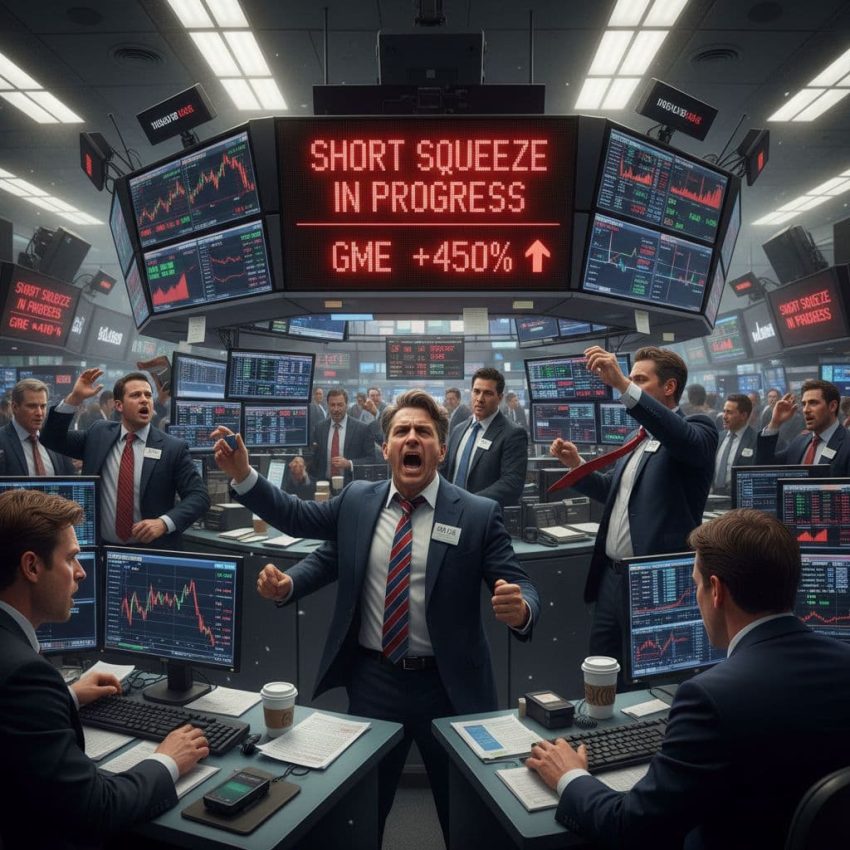
The Short Squeeze Explained: How Traders Get Burned (and Paid)
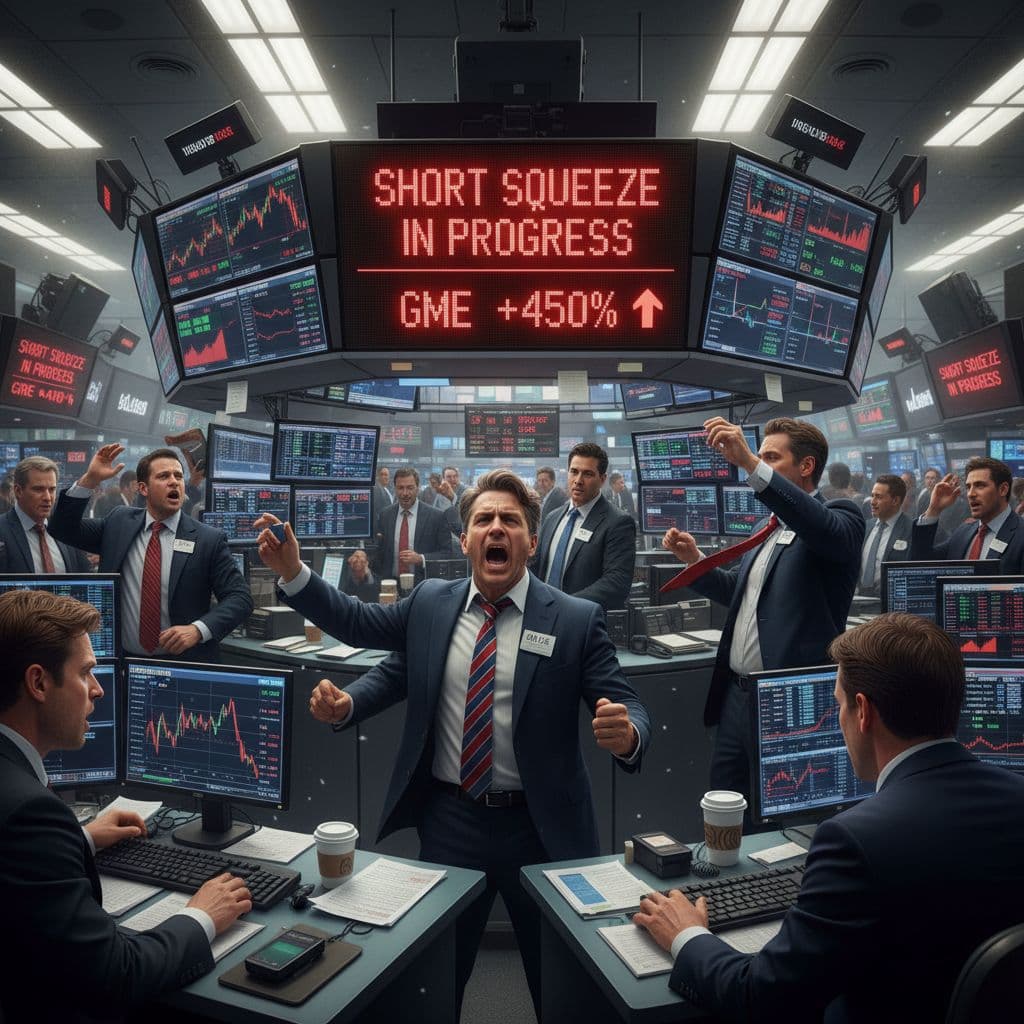
Ever seen a stock rocket higher in a day for no clear reason? That move might be a short squeeze. Here is the simple promise: you will learn what a short squeeze is, why shorts get hurt, and how some traders profit while others tap out.
In one line, a short squeeze is a fast price jump that forces short sellers to buy shares back at higher prices, which pushes the price even higher.
This guide breaks down key terms, how a squeeze starts, what risks it creates, how to spot potential setups, common myths, and quick lessons from real cases. We will keep it plain, useful, and focused. As always, this is education, not advice. Risk is real, and capital is finite.
Short Squeeze 101: What It Is and How It Works
Short selling is a simple process, even if the rules can get messy.
- You borrow shares from your broker.
- You sell those shares in the market.
- You try to buy them back later at a lower price.
- You return the shares, and your profit is the difference, minus fees.
That is the plan. The squeeze is the nightmare for shorts. If price rises, unrealized losses grow. Brokers tighten margin limits. Borrow gets scarce or more expensive. Shorts must buy shares back to close. That buying pushes price higher. More shorts get tagged, and the cycle feeds on itself.
What creates this pressure? A few parts tend to show up together:
- High short interest, a large chunk of the float is shorted.
- Small float, not many tradable shares exist.
- Rising borrow fees, shorts pay more to stay in the trade.
- A fresh catalyst, news, an upgrade, a rumor, or a new product.
- Fast volume, more buyers and fewer sellers in the book.
Think of it like a crowded exit door. Shorts all try to get out at once, so the price, which is the cost to exit, jumps. In a tight float, even small market orders can lift price a lot. Add in new buyers chasing the move, and you get a steep, sudden spike.
For a quick primer, these resources help ground the definitions and mechanics: see Short Squeeze on Wikipedia and this overview from Corporate Finance Institute on how a short squeeze works.
A simple story: why price can jump when shorts must buy
Say 1,000 shares are sold short at 10 dollars. The short seller expects a drop to 8. Instead, news hits. Buyers push it to 12. On 1,000 shares, the short is now down 2,000 dollars.
The broker checks margin. If the account is small or already tapped, the broker may raise maintenance margin. The short either adds cash or buys back shares to cut risk. Covering adds buy orders. Other shorts see price rising and hit market buy to exit fast. A thin order book means those market buys fill at worse prices.
Price pops to 13, then 14. Each dollar higher hits more stops. That forced buying is the squeeze. If supply is tight, the move can be violent, since there are not many shares to buy at each level.
Key terms you need to know (short interest, float, days to cover)
- Short interest: Percent of the float that is sold short. Higher means more fuel for a squeeze.
- Float: Shares available to trade. Lower float often means bigger moves.
- Days to cover: Short interest divided by average daily volume. Tells you how many days it might take for shorts to exit. Higher means exits can clog.
- Borrow fee: Annualized rate to borrow shares. Rising fees squeeze shorts even if price is flat.
- Utilization: Percent of lendable shares that are on loan. High utilization means borrow is scarce.
These metrics show crowding, cost, and the path to exit. When they all point to pressure, risk of a squeeze rises.
Common triggers that start a squeeze
- Surprise earnings, big beat or strong guide.
- New deal or product that changes the story.
- Analyst upgrade or target hike.
- Fresh scarcity of borrow or a borrow recall.
- High volume at the open, with market-on-open orders.
- A clean break over a key price level on the chart.
- Social buzz that pulls in more buyers.
Limit up or limit down halts can add fuel. Thin liquidity, wide spreads, and fast tape magnify the move.
Options and the gamma squeeze, in plain English
Calls add another engine. Traders buy call options. Market makers who sell those calls hedge by buying shares. If price rises, they need more shares to stay hedged. That creates extra demand.
This is a gamma squeeze. It can lift price even without much short interest. When a gamma squeeze stacks on top of short covering, the move can get fast and steep. That is why you will sometimes see price push hardest near popular call strike prices.
For a deeper retail-friendly take on the dynamics, see What’s a Short Squeeze and Why Does It Happen? from Schwab.
Why Short Sellers Get Burned in a Squeeze
Shorts face a tough math problem. Losses grow as price rises, and there is no hard cap on how high price can go. Brokers fund part of the position, so they set rules that protect their capital first. Borrow can get pulled. Liquidity can vanish. The crowd can swarm the same exit.
Think in simple numbers. You short at 10 with 2,000 shares. Price goes to 15. That is a 10,000 dollar loss before borrow cost. If the account is 25,000 dollars, that drawdown is huge. One bad gap can wipe out a month of work, or the account itself.
Even if you do not panic, the fees keep ticking. If borrow fees jump from 5 percent to 80 percent on an annual basis, the cost to hold can crush the trade. If borrow is recalled, you get forced to cover at market. Then add halts and spreads, and fills can be ugly. The pain compounds in a squeeze.
Unlimited loss, margin calls, and forced buy-ins
Margin lets you borrow against your equity. If the position moves against you, equity drops. Brokers require a maintenance level. If you fall below it, you get a margin call.
- A 20 percent jump against an oversized short can breach maintenance fast.
- Overnight gaps are worse, you cannot manage risk if the move happens when the market is closed.
- If the lender recalls the shares, the broker can force a buy-in. You must buy shares back at market to return them.
Slippage matters. In a fast move, a stop order can fill far from your level.
Borrow costs and locate risks add pain
Hard-to-borrow shares carry a high borrow fee. Fees can spike when demand rises. The rate is annualized, but you pay daily. If the stock pays a dividend, shorts owe the dividend to the lender on the record date. That is an extra hit.
Sometimes you can lose your borrow. If that happens in a squeeze, you are a price taker. You exit where the market lets you, not where you want.
Liquidity traps, halts, and fast tape
In a live squeeze, spreads can blow out. The book can be thin. You may only get partial fills. Under volatility rules, limit up or down halts can pause trading. When trading resumes, price can gap hard. Market orders may fill way above the last trade.
Use limit orders to control fills. Know that limits can miss. In a squeeze, waiting can be fine, and it can also be costly. Size and discipline matter more than usual.
Hype, group moves, and FOMO make it worse
Social posts, chat rooms, and trending tickers pull in fresh buyers. Rising price prints grab attention. Shorts see the heat map turn green and rush to exit. That exit is buying, so price rises more. The loop feeds on itself until the fuel runs low.
Greed and fear show up fast here. Accept that crowd behavior is part of the setup. Plan for it, do not deny it.
How Traders Get Paid: Smarter Ways to Trade a Squeeze
You do not need to predict every squeeze. You only need a plan for ones that fit your rules. Keep risk first. Trade small, enter with intent, exit without drama.
A clean plan has three parts: find the setup, pick the entry and exit, and use tools that show real data.
Spot the setup before it runs
Use a simple checklist:
- High short interest relative to float.
- Rising borrow fee and high utilization.
- A fresh catalyst on the calendar, earnings, event, product, filing.
- Volume building above average, especially premarket.
- Clean levels on the chart, recent highs, key moving averages, whole and half dollars.
- Heavy call buying near round-number strikes.
Short interest data can lag by days. Treat it as a backdrop, not a signal by itself. Look for several signs, not just one.
Plan the trade: entries, exits, and risk
- Size small, then earn the right to add.
- Use a clear invalidation level. If price tags it, you are out.
- Prefer limit orders, especially during halts or spikes.
- Scale out into strength if you are long. Take pieces, not all at once.
- Avoid chasing after big gaps. Let the first pullback form and use a level.
- Use a time stop. If the trade does not work by a set time, exit.
- For day trades, watch: the open, a midday fade, and power hour into the close.
Write down the exit before entry. It reduces emotion when price gets wild.
Tools and data: where to find short interest and borrow rates
You can pull short interest from exchange reports and broker platforms. For broad education, see high level explainers like Corporate Finance Institute’s short squeeze guide and the background entry on Wikipedia’s short squeeze page. Many traders also check third-party tools such as Fintel or Ortex for borrow rates and utilization, plus Nasdaq.com short interest and FINRA daily volume reports. Borrow rates vary by broker and can change fast. Search your ticker plus “short interest” for the latest filings and dates.
For shorts: defend first, then attack
- Do not size up in crowded shorts.
- Use hard stops and honor them. No averaging down as price rises.
- Hedge with calls or call spreads if you stay in a risk zone.
- Respect halts. If borrow gets recalled, act fast and controlled.
- Cover into flushes rather than spikes, the book is thicker on dips.
- Keep a max loss per trade and per day. If you hit it, stop.
The win is survival. Cash is a position.
Real-World Lessons, Examples, and Myths
Short squeezes are not new. The details change, the fuel is the same: crowded shorts, tight supply, and a spark. Here are quick lessons that stick.
GameStop 2021 and AMC: what actually happened
Short interest was very high. Calls traded heavy. Social buzz pulled in a huge crowd. Liquidity changed during the move. Some brokers limited buys on peak days, which skewed order flow. Price went parabolic, then snapped back.
Lessons:
- Liquidity matters. Rules and limits can change mid-trade.
- Risk can spike fast and stay high.
- Borrow costs and availability are part of the thesis, not an afterthought.
For a big-picture refresher on the basic mechanics behind these moves, the Schwab explainer on what a short squeeze is gives retail-friendly context.
Volkswagen 2008: the squeeze that shocked pros
Porsche revealed control over much of the float. Tradable shares were scarce. Shorts scrambled to buy back shares and found there were not many available. Price ripped. Some pros got caught offside, not because they were careless, but because supply was locked up.
Lesson:
- Know the float, who owns it, and what can lock it. A float that looks fine can vanish if a holder tightens control.
For background definitions and history, the Wikipedia entry on short squeezes provides useful context and examples.
Myth vs fact: not every jump is a squeeze
Some rallies are simple news moves. Others are driven by options hedging, a gamma push with low short interest. A true short squeeze tends to show:
- Rising borrow fee or scarcity.
- High short interest and days to cover.
- Price lifting on heavy volume with signs of covering, like big prints at the ask and sharp spikes after halts.
Hindsight makes everything look obvious. It is not. Your job is to stack evidence in real time and manage risk either way.
For a structured overview of how to spot it, this primer from Corporate Finance Institute on how to spot a short squeeze outlines the standard ingredients.
Rules that matter: Reg SHO, SSR, and circuit breakers
- Reg SHO sets locate requirements for short sales and flags fails-to-deliver. It tries to keep shorting tied to real borrow.
- The short sale restriction rule, SSR, kicks in after a 10 percent down move in a day. It limits shorting on downticks for the rest of that day and the next.
- Limit up or limit down halts can pause trading when price moves fast. This can compress supply and cause gaps when trading resumes.
These rules change the pace of a move, and they shape short supply during stress.
Conclusion
Short squeezes happen when forced buying meets tight supply. Shorts must buy to exit, that buying pushes price up, and the loop feeds itself. That is the core idea.
Trade with a few simple rules:
- Keep size small.
- Plan exits before entry.
- Use limit orders for control.
- Confirm the setup with multiple signs.
- Do not fight a runaway move.
Stay nimble, protect your account, and live to trade the next setup. Short squeezes can pay or they can punish. Put risk first, always.